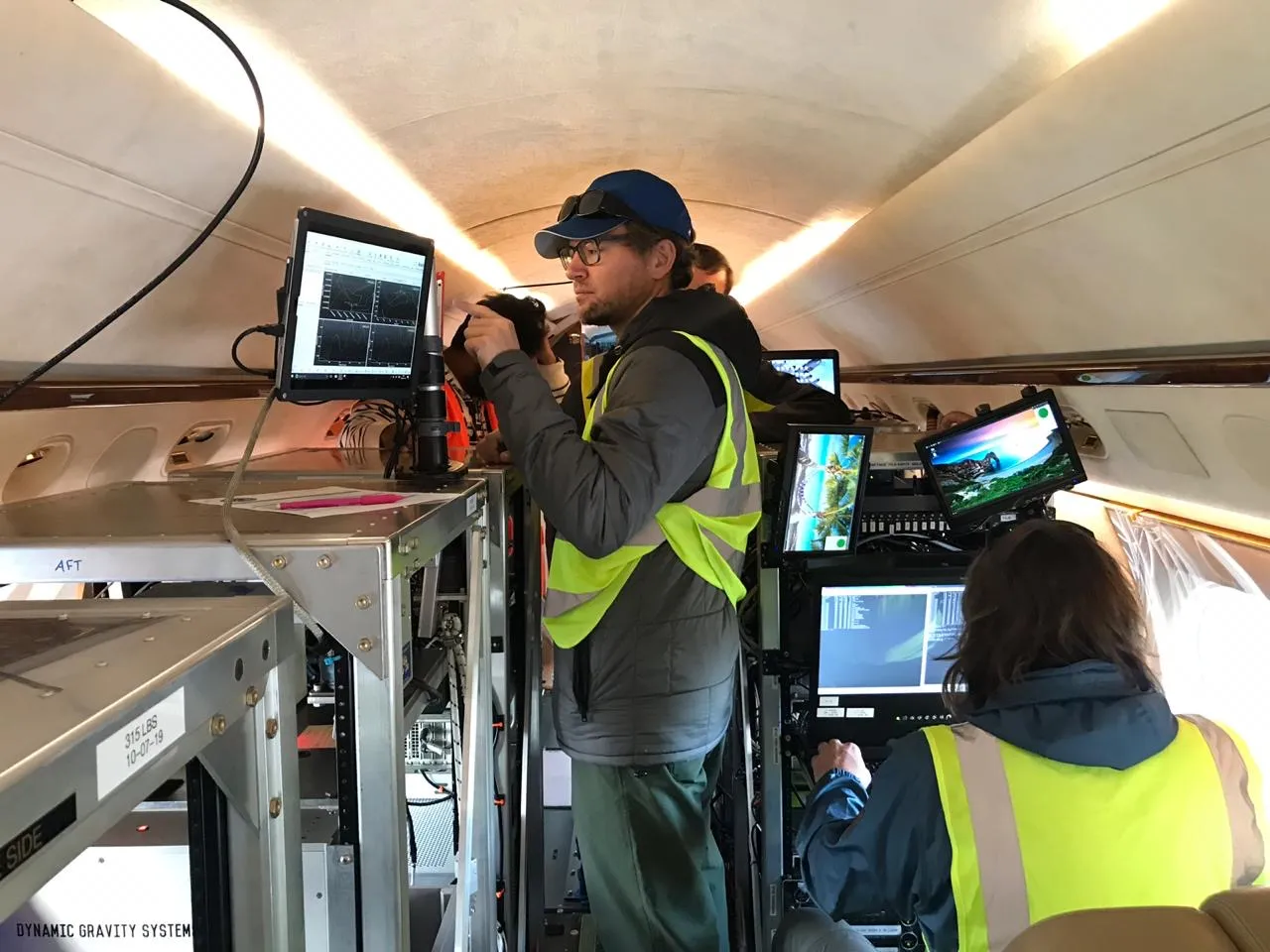

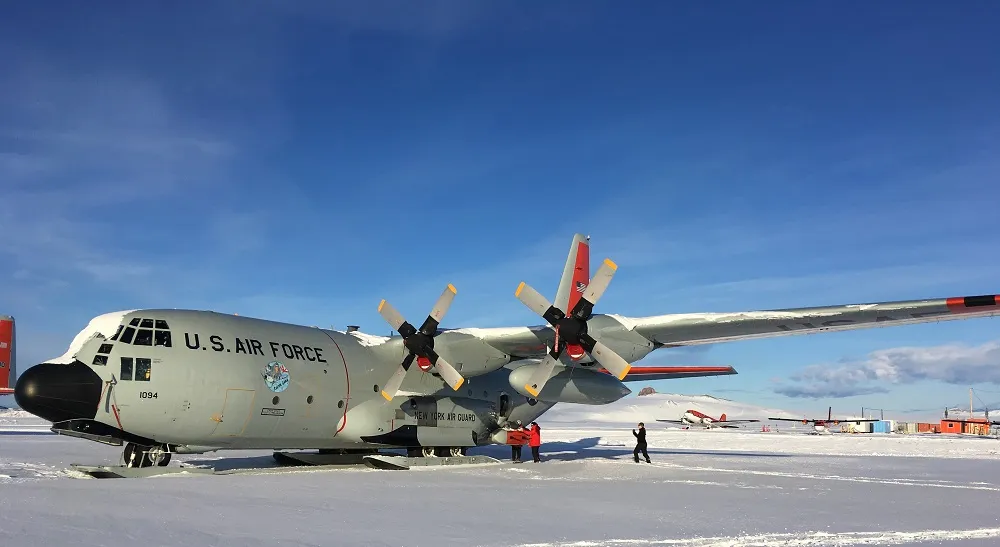
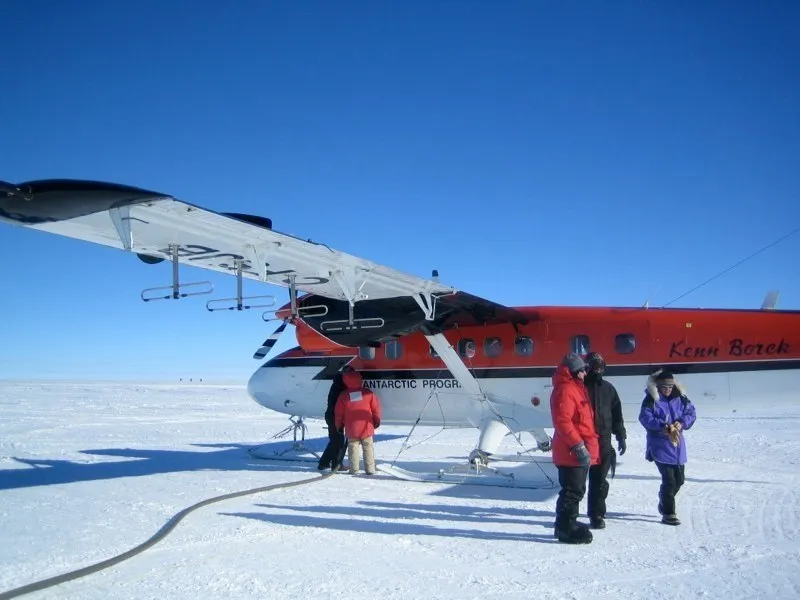
Airborne Fieldwork Safety Plan
This safety plan is reviewed before every airborne field
deployment and modified on an as needed basis.
As such, this document will change over time.
This safety plan was developed specifically with airborne fieldwork in mind. Airborne fieldwork is unique and requires specific parameters in order to keep the field team healthy and safe. There are several references within this amendment to the PGG/LGG Fieldwork Policy and Fieldwork Risk Assessment Checklist. These are integral to the Airborne Fieldwork Safety Plan, as they tackle some of the broader aspects of fieldwork as a whole.
This safety plan also expects the P.I. Team to have taken ample time and effort reviewing these documents when developing the proposed fieldwork. That consideration will allow for ample scheduling time and funding for this preparation.
Pre-Fieldwork
Prior to deployment, the P.I. Team or Fieldwork Coordinator are encouraged to work through the Fieldwork Risk Assessment Checklist. The checklist includes planning techniques, personal considerations, and potential environmental hazards. It is crucial to have these reviewed thoroughly and presented to fieldwork participants as plainly as possible.
The following is a list of tasks to complete before, during, or after the required Pre-Deployment Meeting:
- Distribute LDEO Code of Conduct to all participants for revision
- Distribute PGG/LGG Code of Conduct to all participants for revision
- Mandatory training on Safety and Title IX for all participants (including P.I.s)
- Complete and distribute the Fieldwork Safety Form
- Register all traveling students with Columbia University
- P.I.s and Fieldwork Coordinator inform participants about the project details.
- Outline all expectations of the fieldwork and participants.
- Familiarize participants with tasks that will need to be performed during fieldwork, and provide necessary training and hands on experience.
- Provide detail about all available aircraft to be flown during fieldwork.
- Is ear protection available?
- How large is the interior of the aircraft? Is there space to move around during long flights?
- Are bathrooms accessible? Do they provide privacy?
- What is the anticipated aircraft crew to fieldwork participate ratio onboard survey flights?
- Distribute a completed Deployment Packet with detailed logistical information about the field site.
- Distribute the PGG/LGG Post-Fieldwork Survey to be completed by participants upon return.
- Discuss culture and conduct while using military aircraft and facilities.
- Delegate an aircraft coordinator to oversee wellbeing of participants in flight (i.e. bathroom access, dramamine access, etc.)
- Prepare boundaries and expectations for cohabitation and multi-institutional working environments.
- Realistic preparation of in-flight entertainment, lack thereof, and instrument/sensor monitoring.
During Fieldwork
It is important to ensure that each team member is safe for the duration of the fieldwork. Safety in the field is multifaceted and includes a number of potential hazards, such as: exposure to cold weather, off-road driving, handling dangerous equipment, lifting and carrying heavy loads, etc.
Airborne Fieldwork is typically multi-institutional, as such, participants will regularly interact with people outside of their institutional co-workers. Moreover, there is a strong possibility of interacting with other field teams, locals, and emergency personnel. In order to have a successful field campaign, keeping each other safe and healthy is vital.
The following is a list of best practices for airborne fieldwork that were put together by PGG/LGG Team Members, based on successful deployment techniques.
Best Practices During Airborne Fieldwork:
- Wear team clothing or equivalent ‘uniform’ when relevant
- Use high visibility vests when possible / relevant
- Delegate a participant to act as a mandatory reporter while onboard the aircraft, if the onsite point of contact is not on the flight.
- Explicitly state the reporting structure within this type of fieldwork environment
- Discuss at length the working relationship with other fieldwork participants who aren’t from PGG/LGG/LDEO
- Ensure awareness of the rubric for managing and reporting incidents that arise during fieldwork (while being aware that internet access is not always available)
- Ensure participants can be evacuated at no cost to themselves. This includes the following acceptable reasons:
- If the participant feels a Title VII or Title IX violation has occurred and wants to return to town, base, or home for safety reasons and/or to file a complaint.
- If the participant feels they are experiencing a medical emergency.
- Explicitly state that all field safety rights can and will be exercised without retaliation or adverse effect on the participant – particularly an early career scientist or student’s academic career.
- Allow participant access to dramamine, or other motion sickness medications.
- Discuss ways to manage stress and frustration for when things go wrong (i.e. mechanical difficulties, weather delays, sensor failure, etc.) in a healthy manner
- Discuss ways to manage exhaustion and exhaustion empathy when working long hours for many days in a row
- Ensure ample rest and fuel for field team members:
- Schedule days off for team members, if possible (taking gravity watch into consideration)
- Require allowance for a full night’s rest (at least 7-8 hours when permitting)
- Make sure team members get three full meals a day, plus available snacks
- Make sure team members are properly hydrated and have access to potable water (especially on aircraft)
- Access to caffeinated beverages for those who require them
- Ensure access to bathroom facilities onboard aircraft and on land
- Do all that can be done to promote privacy
- Require that aircraft bathroom facilities are prepared immediately upon reaching cruising altitude, if not before takeoff.
- Delegate a participant as an in-flight point of contact with access to pilot communication, satellite communication, etc., in the event of an emergency while onboard the aircraft.
- Ensure the team members have access to a communication device at all times (i.e. internet, telephone, satellite phone, radio, etc.)
- If training is required to use the satellite phone or radio, ensure all team members receive this training.
- If emergency contact information is specific to the field location, ensure this information is added to the Fieldwork Safety Form and distributed to every team member.
Post-Fieldwork
Following the Field Team’s return home, the P.I. and Fieldwork Coordinator’s work is not finished until the PGG Post-Fieldwork Survey has been submitted by all fieldwork participants. The results of which should be anonymous and assist in future fieldwork development.
A Post-Fieldwork Debrief should be scheduled and all team members (including non-fieldwork participants) should be invited to participate. This debrief should provide a forum to consider risks and successes from all perspectives, science work successfully completed, and future plans.
Ongoing Safety Plan Revision
This safety plan is not final. It will be subject to evaluation and review before, during, and after each field season and updated as required.
Currently, no post-fieldwork survey exists at Lamont. We hope this will be added for all fieldwork across campus in the future. This LDEO Post-Fieldwork Survey is a template we put together to present to the Lamont Administration as a framework. The advantage of a form like this is that team members from any Lamont field program will be able to submit incidents anonymously. This “will allow Lamont to track field experiences and identify any persistent patterns.” (LDEO Code of Conduct)